Your Site-Selection Process May Be Finding Environmental Risk Too Late
- Envirosite
- |
Share this post:
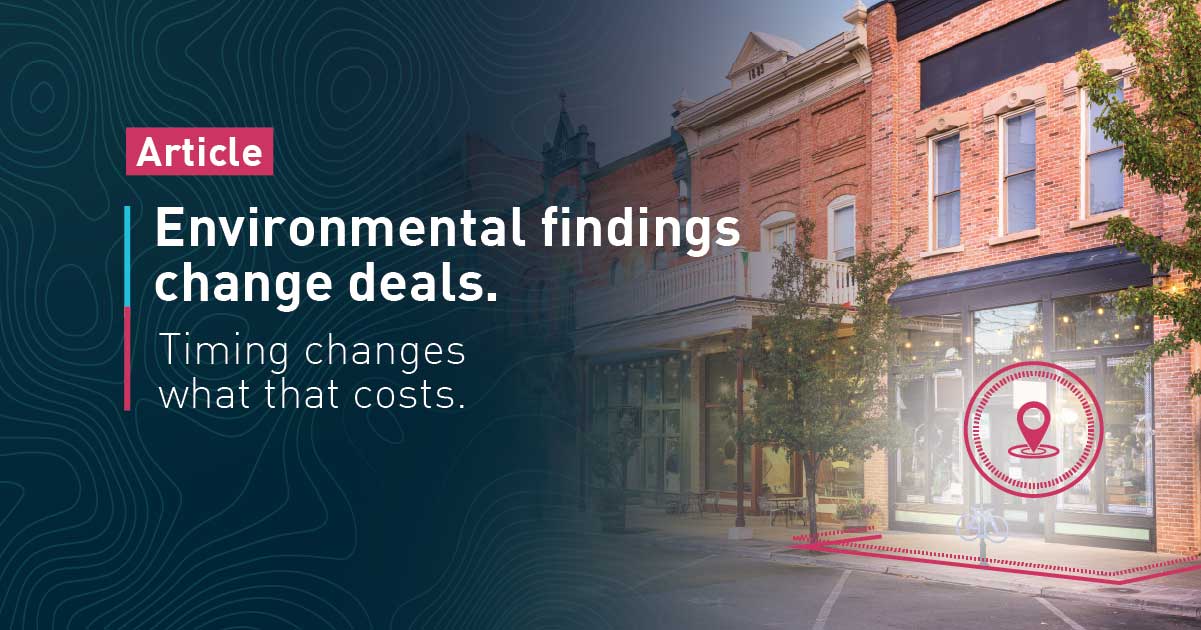
For acquisition teams evaluating candidate sites, timing is the variable that determines whether environmental findings protect a deal or complicate it.
A regional retail chain evaluates 12 potential locations across three markets over eight weeks for a planned expansion. Six sites advance to preliminary lease negotiations. No environmental screening is ordered during the evaluation window. In week seven, as preferred sites enter formal due diligence, Phase I Environmental Site Assessments are commissioned across all six locations. Phase I reports identify recognized environmental conditions at three sites, former gas station operations and dry-cleaning adjacencies. The environmental consultant recommends Phase II assessments at two locations. The exclusivity period expires before results arrive.
The team reprices two deals, abandons one site entirely, and extends deadlines on the remainder. What began as site selection became crisis management. The environmental findings were accurate and necessary. The timing made them expensive.
This sequence repeats across acquisition workflows because teams treat environmental due diligence as transaction-stage compliance rather than selection-stage filtering. Environmental due diligence can alter purchase price or dissuade buyers from proceeding with transactions. Those decisions become constrained when findings arrive after preference has hardened and resources have been committed to a specific property.
Some teams may argue that screening earlier only adds cost, since formal environmental diligence is already required before closing. But late certainty is expensive in its own right. It forces rushed renegotiation, avoidable extension fees, or ties up capital behind a site that should have been screened out sooner. The question is not whether diligence is necessary, but when its findings are most useful.
How commitment hardens before findings arrive
Consider how deal pressure accumulates before a Phase I report lands. Initial site visits generate internal enthusiasm and preliminary lease terms establish price expectations. Legal counsel begins title review while finance updates acquisition models. Leadership forms preferences based on location, visibility, and operational fit. By the time environmental findings arrive, the site has acquired institutional momentum. Complications feel like obstacles rather than decision inputs.
The same environmental concern means different things depending on when it surfaces. Groundwater contamination discovered during screening prompts site elimination and candidate substitution. Discovered during due diligence, it prompts liability negotiation and escrow arrangements. Schedule adjustments follow, around a location the team has already committed to pursuing.
A buyer invested in detailed due diligence has limited room to walk away. One still evaluating alternatives retains options. What was a clean exit during early property risk screening becomes a negotiated problem once deal momentum has built. The environmental finding has not changed. The buyer’s position has.
Capital allocation flexibility demands earlier screening
A development director with Phase I results in week three of a four-week exclusivity faces limited options. Proceed with degraded economics, renegotiate under time pressure, or walk away after architectural consultants have been engaged and lender assumptions circulated.
The same finding discovered during initial site evaluation changes the decision architecture entirely. Teams can eliminate unsuitable sites before legal review, redirect to cleaner alternatives, and negotiate with realistic costs. Sellers and lenders both rely on environmental due diligence to assess value and risk. Buyers who discover problems early maintain stronger leverage to address those concerns.
Portfolio exposure accumulates when operators screen sites individually rather than systematically. A restaurant chain evaluating locations across former automotive corridors may encounter similar contamination patterns at multiple sites. Late discovery means each negotiation becomes a separate crisis. Early screening lets teams develop consistent approaches, budget remediation costs, and avoid clustering exposure in weak markets.
The portfolio dynamic is particularly visible when expansion timelines depend on coordinated site openings. One delayed site compresses entire expansion timelines when opening three regional facilities assumes parallel progress. Early screening across all sites surfaces that risk while there’s time to substitute locations, adjust sequencing, or reprice assets.
Transaction due diligence serves different requirements
Formal environmental diligence during transaction stages satisfies lender requirements, documents conditions for counsel, and establishes baseline liability. Environmental liabilities can affect a borrower’s ability to repay loans and influence lender decisions about securitizing debt. Lenders weigh more than repayment risk. Contamination can take precedence over a lender’s lien on the property. Diligence findings also shape how buyer and seller allocate environmental liability between them. These details decide who pays for what, and when.
Early environmental screening operates under different constraints. The goal is decision support, not regulatory compliance. Teams need enough information to compare sites, inform remediation cost estimates, and identify obvious exclusions. Property Risk Map (PRM) gives teams near-instant access to site risk insights, enabling them to prescreen properties before lease terms are negotiated and architectural plans are commissioned.
The practical distinction is one of scope, not sequence. But it answers the critical selection-stage question: does environmental uncertainty warrant deeper investigation? Compliance-grade reports take longer, cost more, and may uncover technical violations requiring formal response even when contamination risk is manageable. Teams that wait for transaction-stage due diligence often receive more precision than they need. The findings arrive after the window for strategic response has closed.
The liability that outlasts the deal
There is a harder reason to screen early, and it sits in the law. Buy a contaminated site and the cleanup can become yours, even if you never spilled anything. Federal liability here is strict. It can follow the property to a new owner regardless of who created the contamination.
It is also joint and several. That phrase matters more than it sounds. One owner can be billed for the entire cleanup, not a slice proportional to their fault. The other responsible parties may be gone, insolvent, or unidentifiable. The bill still lands.
There are protections, but they are conditional. The innocent landowner and bona fide prospective purchaser provisions require all appropriate inquiries before acquisition, along with other statutory conditions. Bona fide prospective purchasers must also satisfy continuing obligations after acquisition.
Practitioners say the same thing in plainer terms. The advice is to start environmental diligence as early as possible. Bring the right people in before issues surface, environmental attorneys, real estate attorneys, consultants. Assemble that group early and a complication becomes a decision. Assemble it late and it becomes a fire drill. The teams who struggle did not screen too soon. They screened too late.
Earlier Screening in Practice
A national paint manufacturer shortening its expansion cycle from 95 days to 21 days demonstrates what this timing shift looks like operationally. Read the case study for how one multi-location operator integrated environmental screening earlier into site selection and what changed as a result.
Environmental due diligence exists to inform investment decisions, but typically arrives after investment preference has been established. Early screening reverses that sequence. Teams learn what they need to know while capital remains mobile.
Environmental findings change deals. Timing decides what those changes cost.
Envirosite
Providing up-to-date environmental data to environmental and real estate professionals. Guaranteed accuracy, comprehensive reporting, and the fastest industry turnaround times for your environmental needs.
Latest Company News